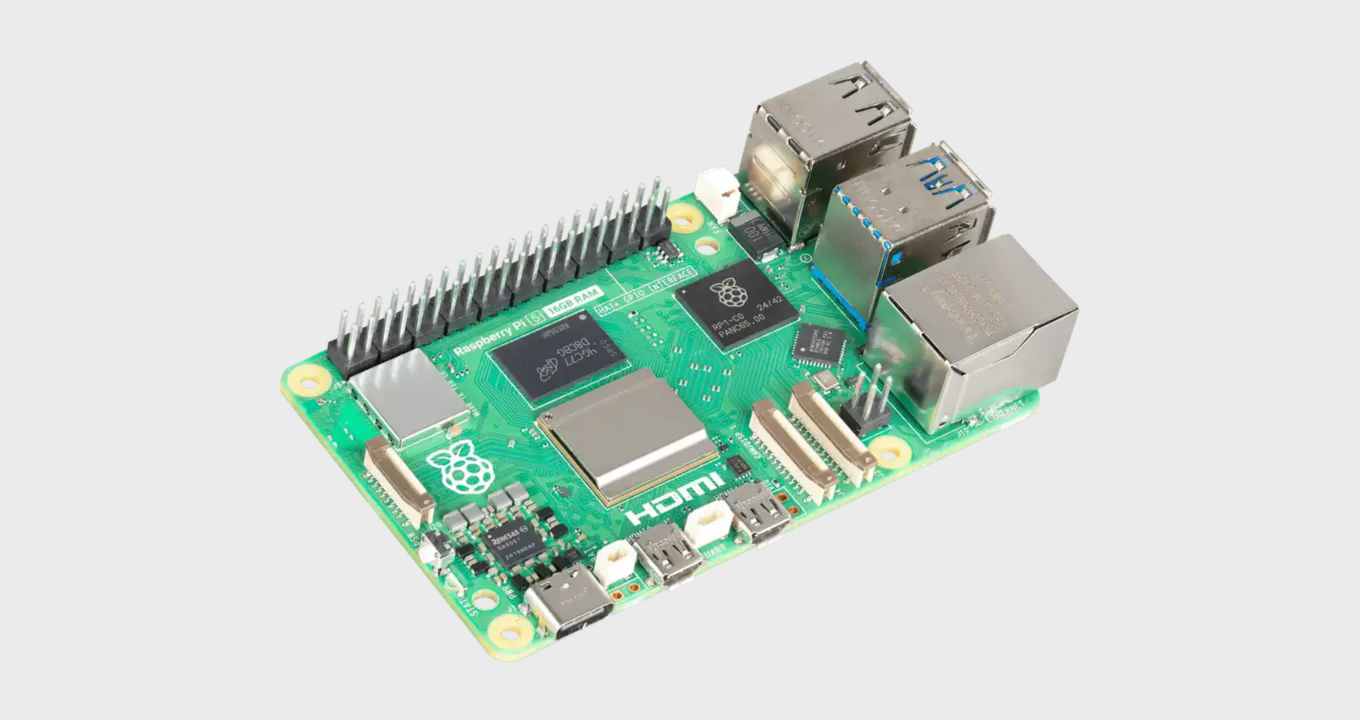
For many developers, hobbyists, and educators, the Raspberry Pi has long been a symbol of affordable computing. That reputation is now under pressure once more. Only a short time after the last adjustment, Raspberry Pi has announced another round of price increases affecting several of its most popular products – especially those equipped with larger amounts of memory.
The models impacted include the Raspberry Pi 4 and Raspberry Pi 5, Compute Module 4 and 5, as well as the keyboard-based computers in the 500 series starting at two gigabytes of RAM. The common factor among all of them is simple: more memory now means a noticeably higher price.
A Global Problem, Not a Local Decision
Raspberry Pi’s leadership emphasizes that the cause of these increases lies outside the company’s control. The global memory market is currently experiencing intense pressure due to the rapid expansion of large-scale AI data centers. These facilities require enormous volumes of high-performance RAM, and their purchasing power reshapes supply chains worldwide.
As a result, even small single-board computers now compete with massive AI systems for the same memory chips. In particular, LPDDR4 memory – used in many current Raspberry Pi models – has become significantly more expensive. In some cases, wholesale prices have reportedly more than doubled within a single quarter, making previous retail pricing unsustainable.
How the New Pricing Scales
Rather than applying a flat increase, Raspberry Pi has chosen to scale the adjustments according to memory size. Boards with 2 GB of RAM become 10 US dollars more expensive. Versions with 4 GB rise by 15 dollars, 8 GB models by 30 dollars, and the top-tier 16 GB variants see the steepest jump at 60 dollars.
This structure reflects the reality of component costs, but it also means that higher-end models lose part of the strong value proposition that once set them apart. For users who rely on these more powerful configurations, the difference will be particularly noticeable.
Some Stability Amid the Turbulence
Not everything is becoming more expensive. Entry-level Raspberry Pi boards with just 1 GB of RAM remain unchanged in price, as does the Raspberry Pi 400. Older products such as the Raspberry Pi Zero and Raspberry Pi 3 are also unaffected for now, since they rely on older memory technologies for which sufficient stock is still available.
This creates a clear dividing line between legacy platforms and newer, more capable hardware.
Looking Ahead
Raspberry Pi expects the coming year to remain challenging but expresses cautious optimism. If the memory market stabilizes and supply improves, the company intends to reduce prices again. Until then, developers may need to think more carefully about which configuration they truly need – or consider alternative boards for certain projects.
What is clear, however, is that the era of ultra-cheap computing is increasingly shaped by forces far beyond the maker community. The same technologies driving breakthroughs in artificial intelligence are now influencing the price of the smallest computers on our desks.
Comments